
Payment of matured deposit to ‘either’ or ‘surviving’ joint account holder constitutes valid discharge of bank’s liability

Payment of matured deposit to ‘either’ or ‘surviving’ joint account holder constitutes valid discharge of bank’s liability

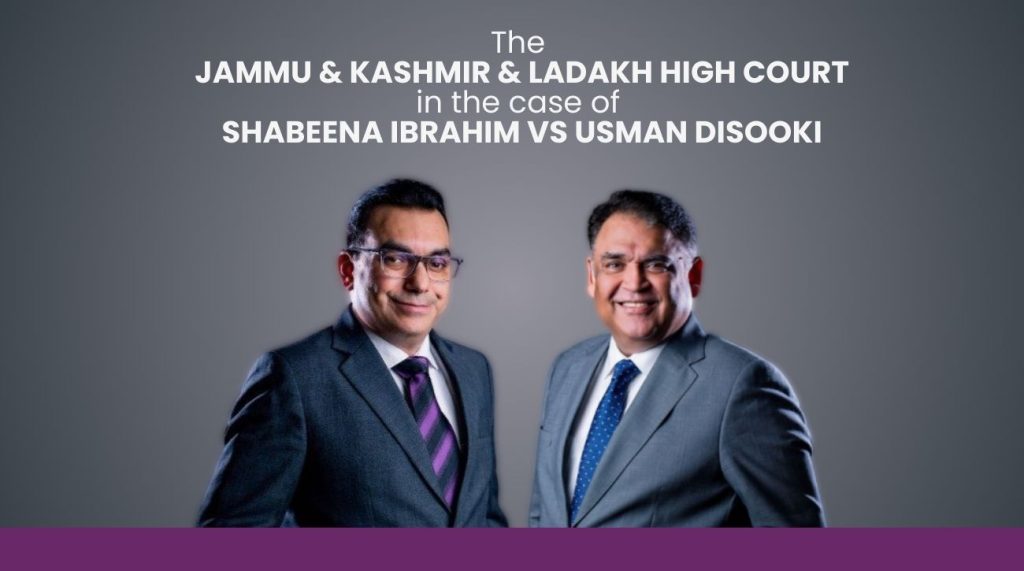
The Jammu & Kashmir & Ladakh High Court in the case of Shabeena Ibrahim vs Usman Disooki [CRM(M) No.485/2023] dated November 26, 2025, has held that if the operating instructions in a joint account is ‘either or survivor’ and one of the account holders expires before the maturity, no pre-payment of the fixed/term deposit can be allowed without the concurrence of the legal heirs of the deceased joint holder. It is further clear that once the fixed/term deposit matures, the payment can be made to the survivor on maturity.

The Court observed that unless the bank is restrained by an order of a competent court, the bank would be within its rights to make payment to the survivor named in the account. Thus, in a case where a joint account is opened with a survivorship clause, the payment of the balance lying in the deposit account to the survivor of the deceased deposit account holder would be a valid discharge of a bank’s liability. However, the payment made to a survivor would not affect the right or claim which any person may have in respect of the amount released in favour of the survivor.

The Court referred to the RBI’s Master Circular on Customer Service in Banks (DBOD.No.Leg.BC.95/09.07.005/2004-05, dated June 9, 2005), which mandates that banks incorporate survivorship clauses in account opening forms and publicise their benefits. The Circular clarifies that in the case of deposit accounts where the depositor had utilized the nomination facility and made a valid nomination or where the account was opened with the survivorship clause (‘either or survivor’, or ‘anyone or survivor’, or ‘former or survivor’ or ‘latter or survivor’), the payment of the balance in the deposit account to the survivor(s)/nominee of a deceased deposit account holder represents a valid discharge of the bank’s liability. This discharge holds provided the bank verifies the survivor’s identity and death certificate, and no court order restrains payment, conditions fully met here.

The Court also referred to the RBI’s Master Circular on Maintenance of Deposit Accounts (RBI/2014-15/17,DBR.No.Dir.BC.10/13.03.00/2014-15, dated July 1, 2014), to observe that for term deposits with survivorship, premature withdrawals require joint consent if both are alive, but post-death payments to the survivor are routine and liability-free. Thus, once the petitioner bank transfers the amount from the joint account to the survivor, the petitioner bank is discharged from its liability towards all claims. The Account number changes were deemed administrative, not manipulative, and the pending civil suit did not bind the bank absent an injunction.

This case has been handled by Mr Sanjay Gupta (Managing Partner- Dispute Resolution) and Mr Rajnish Gaur (Partner- Head of Criminal Law Practice)


You can access the original judgment on this link

RBI Rolls out consolidated Master Directions

Implications of RBI’s proposed changes in regulations related to Form of Business

India-Japan : The Strategic Partners

RBI Rolls out consolidated Master Directions

Implications of RBI’s proposed changes in regulations related to Form of Business

India-Japan : The Strategic Partners

Internship & Articleship

Error: Contact form not found.

Disclaimer

By proceeding further and clicking on the “I ACCEPT” button below, you acknowledge that you of your own accord wish to know more about SNG & Partners (“The Firm”) for your own information and use. You further acknowledge that there has been no solicitation, invitation or inducement of any sort whatsoever from SNG & Partners or any of its employees, partners, associates or members to create an attorney-client relationship through this website. You further acknowledge having read and understood this Disclaimer.

This website is a resource for informational purposes only and is intended, but not promised or guaranteed, to be correct, complete, and up-to-date. While SNG & Partners has taken utmost care to ensure accuracy and completeness of the information contained on this website, the Firm does not warrant that the information contained on this website is accurate or complete, and hereby disclaims any and all liability for any loss or damage caused or alleged to have been caused to any person by relying on any information contained on this website. The contents of this website should not be construed as an opinion, legal or otherwise, on any issue or subject. 

SNG & Partners further assumes no liability for the interpretation and/or use of the information contained in this website, nor does it offer a warranty of any kind, either expressed or implied. The owner of this website does not intend links from this site to other Internet websites to be referrals to, endorsements of, or affiliations with the linked entities. The Firm is not responsible for, and makes no representations or warranties about the contents of websites to which links may be provided from this website.

Furthermore, the owner of this website does not wish to represent anyone desiring representation based solely upon viewing this website or in a Country/State where this website fails to comply with local laws and ethical rules of that state. You may note that the use of the internet or email for conveying confidential or sensitive information is susceptible to risks of disclosure associated with sending email over the internet.

The Firm advises against the use of the communication platform provided on this website for exchange of any confidential, business or politically sensitive information. User is expected to use his or her judgment and such information shared will be solely at the user’s risk.

Communication through this website in any form shall be for the purpose of enquiries only and shall not hold good for service of any kind of court proceedings, summons, advance notice, pleadings etc. For service of any such document and/or notice to the Firm and/or to any of its partners under the act or rules including under CPC, Cr. PC and/or any other law shall be served at our concerned office or to the concerned advocate dealing with the matter.