Legal Updates (Dec 8 – Dec 13, 2025)

Legal Updates (Dec 8 – Dec 13, 2025)

Legal Updates (Dec 8 – Dec 13, 2025)

CASE UPDATES:

Resignation by an employee forfeits his past service, which makes him ineligible for any pension, but not gratuity, which is a statutory right of an employee completing five years of service tenure. Thus, the legal heirs of the deceased employee shall be entitled to receive gratuity in terms of the provisions of the Gratuity Act, 1972
 
The Supreme Court in the case of Ashok Kumar Dabas vs Delhi Transport Corporation [S.L.P.(C) No.4818 of 2023] dated December 09, 2025, has held that the legal heirs of the deceased employee shall be entitled to receive gratuity in terms of the provisions of the Gratuity Act, 1972, along with the entitlement towards the leave encashment. While explaining the difference between resignation and retirement, the Court said that resignation by an employee forfeits his past service, which makes him ineligible to any pension, but not gratuity, which is a statutory right of an employee completing five years of service tenure.
 
The declaration came in the wake of the beneficial provision of Section 4 of the 1972 Act, which stipulates that an employee who had rendered not less than five years of service will be entitled to payment of gratuity, regardless of the fact that he had retired or resigned from service.
 
The Court observed that, in terms of Section 5 of the 1972 Act, there is no notification issued by the appropriate government exempting the Delhi Transport Corporation (respondent) from the application of the 1972 Act. Once the respondent could not establish that the 1972 Act does not apply to the Corporation, the appellant’s claim for release of gratuity cannot be denied, even if he had resigned from service.
 
It was argued by the appellant that the words used in his resignation letter, i.e., “notice for resignation,” should not be literally construed but should be taken as voluntary retirement so as not to deprive him of his pension, which was earned on account of more than 20 years of service rendered by him. However, the Court rejected this argument by citing Rule 26 of the Gratuity Rules, 1972, which provides that resignation from service entails forfeiture of past service.
 
The Court pointed out that there is a difference between resignation and retirement, and the benefits flowing therefrom. Reference was made to the decision in the case of Shashikala Devi vs. Central Bank of India [2014 INSC 1045]. Hence, it was held that the appellant is only entitled to receive gratuity in terms of the provisions of the 1972 Act for the service rendered by him, as well as leave encashment, but not the pension.


The amended provisions of Section 13 (8) of the SARFAESI Act extinguish the right of redemption of the borrower in the event he fails to repay his dues and redeem the asset before publication of the Auction Notice
 

The Jammu & Kashmir & Ladakh High Court in the case of Gogi Motor Store vs Citizens’ Cooperative Bank [WP(C) No. 2274/2025] dated December 09, 2025, has held that the amended provisions of Section 13 (8) of the SARFAESI Act extinguish the right of redemption of the borrower in the event he fails to repay his dues and redeem the asset before publication of the Auction Notice. Since, in the present case, the right of the petitioner to redeem the secured assets stands extinguished, he cannot defer the auction notice and proceedings under the SARFAESI Act. 

The assertion came in sequence of the events which make it conspicuous that the petitioner has thrown challenge to the Auction Notice which came to be duly published in the newspapers, and it was only after the lapse of two months from the date of publication, the petitioner has filed a writ admitting his liability, and has challenged  the action of the respondent-Bank by initiating the proceedings under the provisions of the SARFAESI Act.

Reference was made to the decision of the Apex Court in the case of M. Rajendran vs M/s KPK Oils and Proteins India Pvt Ltd. [2025 SCC Online SC 2036], wherein it was held that “A borrower has no unfettered right to tender such amount of dues, as stipulated in Section 13(8), after the date of publication of notice for public auction or inviting quotations or tender from public or private treaty”. 

The Court therefore, reiterated that where the borrower tenders his loan dues after the publication of the notice stipulated in Section 13(8) of the SARFAESI Act, the secured creditor is not bound to accept it, and can continue to proceed with the transfer of the secured asset, by way of lease, assignment or sale. The Court also observed that once the Auction Notice is published, the right of redemption of the petitioner-borrower stands extinguished, and any amount, even if deposited, would be immaterial. 

Since the petitioner has failed to repay his dues till the publication of the Auction Notice, and the third respondent was not only declared as a successful bidder but has deposited the entire consideration as per the terms of the Auction Notice with the respondent Bank, the Court emphasised that the petitioner has made an abortive attempt just to delay the process after having been failed to respond to all the notices issued under the SARFAESI Act to deposit the outstanding amount.


Payment of matured deposit to ‘either’ or ‘surviving’ joint account holder constitutes a valid discharge of the bank’s liability
 
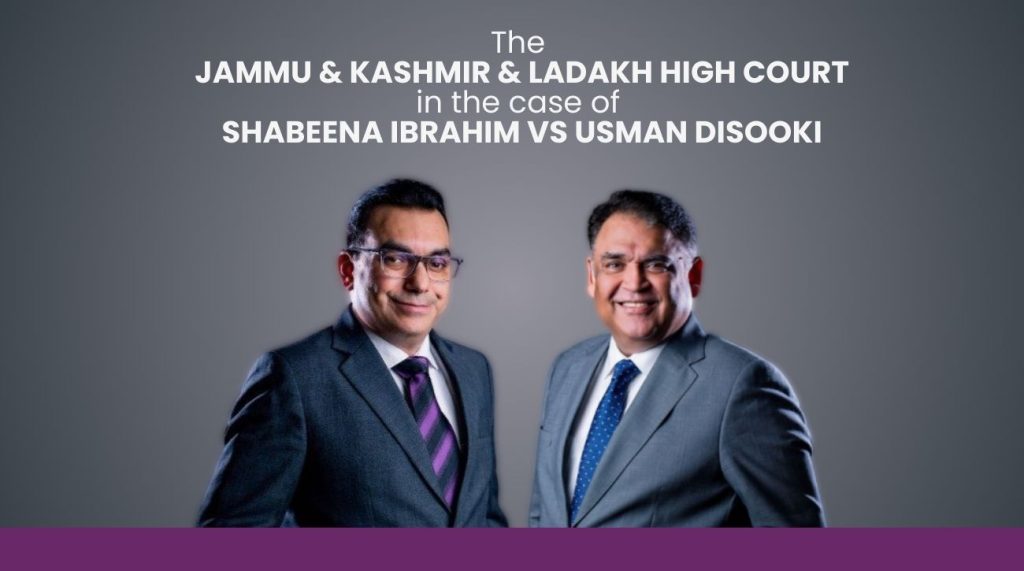
The Jammu & Kashmir & Ladakh High Court in the case of Shabeena Ibrahim vs Usman Disooki [CRM(M) No.485/2023] dated November 26, 2025, has held that if the operating instructions in a joint account is ‘either or survivor’ and one of the account holders expires before the maturity, no pre-payment of the fixed/term deposit can be allowed without the concurrence of the legal heirs of the deceased joint holder. It is further clear that, upon maturity, the fixed/term deposit can be paid to the survivor.
 
The Court observed that unless the bank is restrained by an order of a competent court, the bank would be within its rights to make payment to the survivor named in the account. Thus, in a case where a joint account is opened with a survivorship clause, the payment of the balance lying in the deposit account to the survivor of the deceased deposit account holder would be a valid discharge of a bank’s liability. However, the payment made to a survivor would not affect the right or claim which any person may have in respect of the amount released in favour of the survivor.
 
The Court referred to the RBI’s Master Circular on Customer Service in Banks (DBOD.No.Leg.BC.95/09.07.005/2004-05, dated June 9, 2005), which mandates that banks incorporate survivorship clauses into account-opening forms and publicise their benefits. The Circular clarifies that in the case of deposit accounts where the depositor had utilized the nomination facility and made a valid nomination or where the account was opened with the survivorship clause (‘either or survivor’, or ‘anyone or survivor’, or ‘former or survivor’ or ‘latter or survivor’), the payment of the balance in the deposit account to the survivor(s)/nominee of a deceased deposit account holder represents a valid discharge of the bank’s liability. This discharge holds provided the bank verifies the survivor’s identity and death certificate, and no court order restrains payment, conditions fully met here.
 
The Court also referred to the RBI’s Master Circular on Maintenance of Deposit Accounts (RBI/2014-15/17,DBR.No.Dir.BC.10/13.03.00/2014-15, dated July 1, 2014), to observe that for term deposits with survivorship, premature withdrawals require joint consent if both are alive, but post-death payments to the survivor are routine and liability-free. Thus, once the petitioner bank transfers the amount from the joint account to the survivor, the petitioner bank is discharged from its liability towards all claims. The Account number changes were deemed administrative, not manipulative, and the pending civil suit did not bind the bank absent an injunction.
 
 
Transfer of ownership of the secured asset in case of a statutory sale under SARFAESI takes place upon the issuance of the sale certificate; Amendment to Section 13(8) of the SARFAESI merely advances the date of extinguishment of the right of redemption available to a borrower, but it does not affect ownership rights in the secured asset
 
The Bombay High Court in the case of Arrow Business Development Consultants vs Union Bank of India [Writ Petition No. 11132 of 2025] dated December 10, 2025, has clarified that the transfer of ownership of the secured asset in case of a statutory sale under SARFAESI takes place upon the issuance of the sale certificate. The amendment to Section 13(8) of the SARFAESI merely advances the date of extinguishment of the right of redemption available to a borrower, and the loss of the right of redemption does not tantamount to the loss of ownership rights in the secured asset.
 
The sale conducted under the provisions of the SARFAESI Act in the present case was not completed, as the interim moratorium imposed under Section 96 of the IBC stayed all proceedings in respect of any debt of the borrowers, during the intervening period, viz., from the date of confirmation of sale till the issuance of the sale certificate. The Court, therefore, held that a statutory sale under the SARFAESI Act is complete only when the entire payment is made by the auction purchaser and the secured creditor issues a sale certificate under Rule 9(6) of the SARFAESI Rules. The sale is not considered complete merely upon confirmation or receipt of part payment.
 
The Court observed that a sale certificate can be issued only if the entire payment is made to the secured creditor, and if the sale certificate is not issued, prior to the coming into force of the moratorium, then the sale is not complete. In the present case, the Court found that after the first two tranches of payment, the entire balance of six tranches of payment was made by the petitioner and received by the bank after the imposition of the interim moratorium.
 
Therefore, the Court observed that once the interim moratorium under Section 96 of the SARFAESI Act is in force, a secured creditor cannot receive the balance payment from the successful purchaser. Thus, if the interim moratorium kicks in post confirmation of the sale but before the balance payment is made, the only outcome is that there is no transfer of ownership of the secured asset in favour of the successful purchaser. This being the case, the Court concluded that if there is any legal embargo in completing the sale, the successful purchaser cannot claim any ownership rights. Moreover, the interim moratorium under Section 96 of the SARFAESI Act is much wider than that under Section 14 of the IBC.  
 
SEBI issues clarification on Digital Accessibility for REs
 
The Securities and Exchange Board of India (SEBI) vide its Circular No. HO/13/19/13(2)2025-ITD-1_VIAP/I/187/2025 dated December 08, 2025, titled “Clarification on Digital Accessibility Requirements”, provides clarification on SEBI’s earlier circulars (dated July 31, August 29, and September 25, 2025) regarding digital accessibility requirements for digital platforms of Regulated Entities (REs).
 
The circular mandates that the “Investors’ Right to have digital accessibility” will now be incorporated into all relevant Investor Charters. Instead of appointing accessibility auditors by December 14, 2025, REs must submit their readiness and compliance status for each digital platform by March 31, 2026, to the designated reporting authorities, with submissions to SEBI routed through a specified email ID.
 
The SEBI has also provided a standard format for reporting and clarified that investors may lodge accessibility-related complaints on SCORES, which REs must resolve to close the complaint. All REs are required to conduct periodic accessibility audits of websites, apps, and portals through certified accessibility professionals.
 
The circular, issued under Section 11(1) of the SEBI Act, aims to enhance investor protection and ensure accessible, compliant digital interfaces across the securities market ecosystem.
 
 
Reserve Bank of India (Commercial Banks – Undertaking of Financial Services) (Amendment) Directions, 2025
 
The Reserve Bank of India (RBI) vide its Notification No. RBI/DOR/2025-26/135 dated December 05, 2025, has updated the Master Directions on financial services. These amendments clarify the roles of banks and their group entities in conducting financial and non-financial activities, including agency business, referral services, lending, and investment management.
 
The key provisions specify that core banking functions and acceptance of time deposits must be undertaken departmentally, while mutual fund, insurance, pension, and portfolio management services must be conducted via group entities.
 
The directions impose prudential investment limits: a single bank may invest up to 10% in any entity, and aggregate investments, including group and overseas entities, may not exceed 20%, with prior approval required for higher exposures.
 
Specific restrictions on Asset Reconstruction Companies, Alternative Investment Funds, and Real Estate/Infrastructure Investment Trusts are detailed. Compliance deadlines require submission of action plans by March 31, 2026, with full conformity by March 31, 2028, ensuring enhanced regulatory oversight and risk management across bank groups.


Reserve Bank of India (Non-Banking Financial Companies – Undertaking of Financial Services) (Amendment) Directions, 2025
 
The Reserve Bank of India (RBI) vide its Notification No. RBI/DOR/2025-26/138 dated December 05, 2025, has revised the regulatory framework for NBFCs that undertake financial services. These amendments follow the replacement of earlier 2016 guidelines with updated entity-wise Master Directions issued on November 28, 2025, and incorporate feedback from stakeholders and public consultations.
 
A key addition is new paragraph 60A, which mandates that NBFCs forming part of a Scheduled Commercial Bank group must also comply with the Commercial Banks – Undertaking of Financial Services Directions, 2025, whenever both the NBFC and the parent bank engage in the same business activity.
 
This ensures uniform regulatory treatment, prevents regulatory arbitrage, and strengthens governance and oversight across bank-led financial conglomerates. The amendments have been introduced under powers granted by Sections 45(L) and 45(JA) of the RBI Act to enhance public interest and regulatory consistency.


SEBI allows migration to AI-Only and Large Value Fund Schemes
 
The Securities and Exchange Board of India (SEBI) vide its Circular No. HO/19/34/11(5)2025-AFD-POD1/I/188/2025 dated December 08, 2025, has outlined modalities for migration to Accredited Investor (AI)-only schemes and operational relaxations for Large Value Funds (LVFs) under the SEBI (Alternative Investment Funds) Regulations, 2012.
 
The circular permits existing AIFs or schemes to convert to AI-only or LVF schemes with investor consent, subject to reporting requirements to SEBI and depositories within 15 days of conversion. AI status of an investor at onboarding is retained throughout the scheme tenure. The maximum permissible extension for AI-only schemes is five years, including prior tenure.
 
The LVFs are exempt from following the standard placement memorandum template and annual audit requirements without specific investor waivers. Trustees or sponsors must ensure compliance through the ‘Compliance Test Report.’ The circular, effective immediately, aims to simplify operations, enhance flexibility, and facilitate ease of doing business for AIFs while protecting investor interests.


Reserve Bank of India (Non-Operative Financial Holding Company) (Amendment) Directions, 2025
 
The Reserve Bank of India (RBI) vide its Notification No. RBI/DOR/2025-26/139 dated December 05, 2025, has introduced amendments to the existing Master Direction governing Non-Operative Financial Holding Companies (NOFHCs), with the changes effective immediately. The amendments replace paragraphs 44–47 of the Master Direction, reiterating that all activities permitted to banks under Section 6(1)(a)–(o) of the Banking Regulation Act, 1949 must be undertaken directly by the bank.
 
The specialised activities, such as mutual funds, insurance, pension fund management, investment advisory, portfolio management, and broking, must be conducted only through subsidiaries, joint ventures, or associates. NOFHCs are not required to seek prior RBI approval for these specified activities, but must notify the RBI within 15 days of board resolution. Prior approval remains mandatory for any other business, and activities not permitted to banks are barred for NOFHC group entities as well.


Reserve Bank of India (Payments Banks – Undertaking of Financial Services) (Amendment) Directions, 2025
 
The Reserve Bank of India (RBI) vide its Notification No. RBI/DOR/2025-26/137 dated December 05, 2025, has updated the framework for Payments Banks following the entity-wise Master Directions released on November 28, 2025. The amendments, developed after public consultation and stakeholder feedback, clarify the definitions and permissible activities for Payments Banks engaging in third-party financial products.
 
The amendment introduces a revised definition of Agency Business, allowing banks to act as agents of third-party product or service providers (TPPSPs) for regulated financial products, including insurance, mutual funds, and pensions, without assuming risk. It outlines responsibilities such as marketing, sales, customer support, and after-sales services.
 
Additionally, Referral Services are defined to permit Payments Banks to refer customers to TPPSPs without involvement in product processes or branding, ensuring operational separation and compliance. The directions aim to standardise practices, maintain regulatory clarity, and protect customer interests while enabling Payments Banks to participate in agency and referral business models.


Reserve Bank of India (Small Finance Banks – Undertaking of Financial Services) (Amendment) Directions, 2025
 
The Reserve Bank of India vide its Notification No. RBI/DOR/2025-26/136 dated December 05, 2025, has revised definitions and guidelines for agency business and referral services, specifying that banks can act as agents for regulated third-party products but cannot handle referral processes directly.
 
The amendment clarifies that certain financial services, such as mutual funds, insurance, pension fund management, investment advisory, portfolio management, and broking, must be undertaken through a group entity under a Non-Operating Financial Holding Company (NOFHC), not departmentally. The notification also revises equity investment limits for banks, including individual and aggregate investment caps, investment conditions, and reporting requirements.
 
Further, restrictions on sponsorship of Asset Reconstruction Companies (ARCs) and investment in Alternative Investment Funds (AIFs), Real Estate Investment Trusts (REITs), and Infrastructure Investment Trusts (InvITs) are outlined, along with timelines for compliance. Additional provisions include professional clearing member eligibility and prudential criteria for derivative markets.



Payment of matured deposit to ‘either’ or ‘surviving’ joint account holder constitutes valid discharge of bank’s liability

RBI Rolls out consolidated Master Directions

Implications of RBI’s proposed changes in regulations related to Form of Business

Payment of matured deposit to ‘either’ or ‘surviving’ joint account holder constitutes valid discharge of bank’s liability

RBI Rolls out consolidated Master Directions

Implications of RBI’s proposed changes in regulations related to Form of Business

Internship & Articleship

Error: Contact form not found.

Disclaimer

By proceeding further and clicking on the “I ACCEPT” button below, you acknowledge that you of your own accord wish to know more about SNG & Partners (“The Firm”) for your own information and use. You further acknowledge that there has been no solicitation, invitation or inducement of any sort whatsoever from SNG & Partners or any of its employees, partners, associates or members to create an attorney-client relationship through this website. You further acknowledge having read and understood this Disclaimer.

This website is a resource for informational purposes only and is intended, but not promised or guaranteed, to be correct, complete, and up-to-date. While SNG & Partners has taken utmost care to ensure accuracy and completeness of the information contained on this website, the Firm does not warrant that the information contained on this website is accurate or complete, and hereby disclaims any and all liability for any loss or damage caused or alleged to have been caused to any person by relying on any information contained on this website. The contents of this website should not be construed as an opinion, legal or otherwise, on any issue or subject. 

SNG & Partners further assumes no liability for the interpretation and/or use of the information contained in this website, nor does it offer a warranty of any kind, either expressed or implied. The owner of this website does not intend links from this site to other Internet websites to be referrals to, endorsements of, or affiliations with the linked entities. The Firm is not responsible for, and makes no representations or warranties about the contents of websites to which links may be provided from this website.

Furthermore, the owner of this website does not wish to represent anyone desiring representation based solely upon viewing this website or in a Country/State where this website fails to comply with local laws and ethical rules of that state. You may note that the use of the internet or email for conveying confidential or sensitive information is susceptible to risks of disclosure associated with sending email over the internet.

The Firm advises against the use of the communication platform provided on this website for exchange of any confidential, business or politically sensitive information. User is expected to use his or her judgment and such information shared will be solely at the user’s risk.

Communication through this website in any form shall be for the purpose of enquiries only and shall not hold good for service of any kind of court proceedings, summons, advance notice, pleadings etc. For service of any such document and/or notice to the Firm and/or to any of its partners under the act or rules including under CPC, Cr. PC and/or any other law shall be served at our concerned office or to the concerned advocate dealing with the matter.